
Breathing techniques
How the Vagus Nerve Helps Calm the Body After Fight, Flight or Freeze
When the brain senses danger, the body moves into survival mode. Heart rate increases, muscles tighten, breathing becomes shallow, and digestion slows down. This is the familiar “fight, flight or freeze” response controlled by the sympathetic nervous system.
For people struggling with anxiety, panic, swallowing fears, or hypervigilance around the throat and body sensations, this state can become stuck “on,” even when there is no real danger present. The nervous system begins reacting to thoughts, sensations, or memories as though they are emergencies.
The good news is that the body also has an inbuilt calming system. This is where the vagus nerve becomes important.
The vagus nerve is the main communication pathway of the parasympathetic nervous system, often called the “rest and digest” system. Once the brain realises you are safe, the vagus nerve helps slow the heart, relax muscles, improve digestion, and return breathing to a calmer rhythm. In many ways, it acts like a brake pedal after the nervous system has accelerated too hard.
One of the fastest ways to influence this calming system is through the breath.
Research shows that slow, controlled breathing can stimulate vagal activity and help reduce sympathetic arousal. Longer exhalations in particular appear to signal safety to the brain and body.
For people with swallowing anxiety or phagophobia, this matters because anxiety often creates throat tension, dry mouth, hyper-awareness of swallowing, and a feeling of tightness. Calming the nervous system first can reduce many of these physical sensations.

Why Breathing Influences the Nervous System
Breathing is unusual because it is both automatic and voluntary. Your body breathes without conscious effort, yet you can also deliberately change the rhythm. This creates a direct bridge between conscious control and the autonomic nervous system.
When breathing becomes rapid and shallow, the brain interprets this as danger. When breathing slows and deepens, especially through the diaphragm, the brain receives signals that the environment is safe.
Researchers have found that diaphragmatic breathing can increase parasympathetic activity, improve heart rate variability, and reduce stress responses.
Think of it like a lighthouse in heavy fog. The nervous system may temporarily lose sight of safety during stress or panic, but steady breathing acts as a rhythmic signal guiding the body back toward calm.


Diaphragmatic Breathing: Activating the Body’s Natural Calm Response
Diaphragmatic breathing, sometimes called belly breathing, is one of the most researched calming techniques.
Instead of breathing high into the chest, the breath moves lower into the abdomen, allowing the diaphragm to fully engage. This style of breathing appears to stimulate vagal pathways and reduce sympathetic activation.
To practice diaphragmatic breathing:
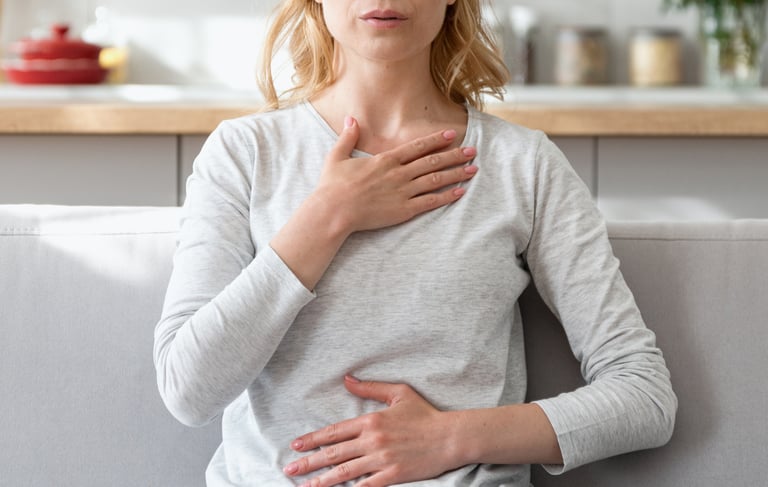
Place one hand on your chest and one on your abdomen
Breathe in slowly through your nose
Allow the lower hand to rise while the chest stays relatively still
Exhale gently and slowly
Repeat for several minutes
Many people notice their shoulders lowering and jaw relaxing within a short time. For individuals with swallowing anxiety, this can reduce the feeling of throat tightness and hyper-focus on swallowing sensations.



Box Breathing: Creating Predictability for an Anxious Brain
Athletes, emergency responders, and military personnel widely use box breathing because it creates rhythm and control during stress.
The technique involves breathing in four equal stages:
Inhale for 4 seconds
Hold for 4 seconds
Exhale for 4 seconds
Hold for 4 seconds
The structured rhythm can interrupt anxious thought cycles and help stabilise breathing patterns. Research suggests slow-paced breathing like this may improve autonomic regulation and reduce acute stress.
An anxious brain craves certainty. Box breathing provides a predictable rhythm that gently redirects attention away from fear and back toward the present moment.


The Physiological Sigh: A Fast Reset for Panic and Overwhelm
Experts call one of the quickest calming techniques the physiological sigh or cyclic sighing.
This involves:
One deep inhale through the nose
A second shorter inhale on top
One long slow exhale through the mouth
This breathing pattern naturally occurs in humans during sleep and emotional regulation. Researchers have found that exhale-focused breathing can rapidly reduce stress and improve mood.
The extended exhale appears especially important because parasympathetic activation becomes stronger during slow outward breathing.
For many people, this technique works well during moments of panic, before meals, or when anxiety around swallowing suddenly escalates.
7/11 breathing
The 7/11 breathing technique was named after the corner shop 7-11. It's an easy way to remember the numbers used.
Essentially, we breathe in through the nose for a count of 7.
Then breathe out through the nose for a count of 11.
Breathing out for longer is important as it keeps more calming carbon dioxide in the body.
I always suggest practicing this for one minute to see what is most comfortable for you. Some people are 5/8 others 8/14, it depends on your size, health, fitness and the speed at which you count.
Practice the exercise for a minute, then 2, then perhaps 3. The sweet spot is when you notice you feel relaxed, but before you feel too lightheaded.
This exercise is great at also taking your mind off the worry, as you're mindfully counting.


Other practices that may stimulate the vagus nerve
Breathing is not the only way to influence the vagus nerve. Several calming activities appear to support parasympathetic activation and emotional regulation.
These practices are not “magic cures,” but they can help the nervous system learn safety again over time.
Humming, singing and gentle vocalisation
Cold water and facial cooling
Mindfulness and Safe Attention Training
For people with anxiety, panic, or swallowing fears, understanding the vagus nerve can be empowering. Your symptoms are not signs of weakness or failure. They are signs of a nervous system trying to protect you.
And importantly, nervous systems can learn new patterns
Scared2Swallow
Based in the UK, clients worldwide
Emergency Support or Crisis Info
disclaimer
Therapies available include hypnotherapy, mindfulness and meditation, which are effective; however, results may vary, and success is not guaranteed. Full client commitment is important, and the client will want to make changes.
© 2025. All rights reserved.
Scared2swallow is not a crisis service, if you are experiencing life threatening condition please contact your emergency services.